
A Shared Table

Satay: A Study in Fire, Smoke, and Sauce

Rendang: Time, Technique, and Intensity
Laksa: One Name, Distinct Expressions
Nasi Lemak: Familiar, Yet Interpreted Differently

A Shared Table
Across Malaysia, Indonesia, and Singapore, food feels familiar — until you pay closer attention.
What appears to be the same dish often carries entirely different expressions, shaped by local ingredients, traditions, and taste preferences. These are not variations by accident, but by design — each plate reflecting the identity of its people.
The differences are rarely loud. They sit quietly in the balance of spices, the depth of a sauce, or the way a dish is finished. And that is where the story begins.
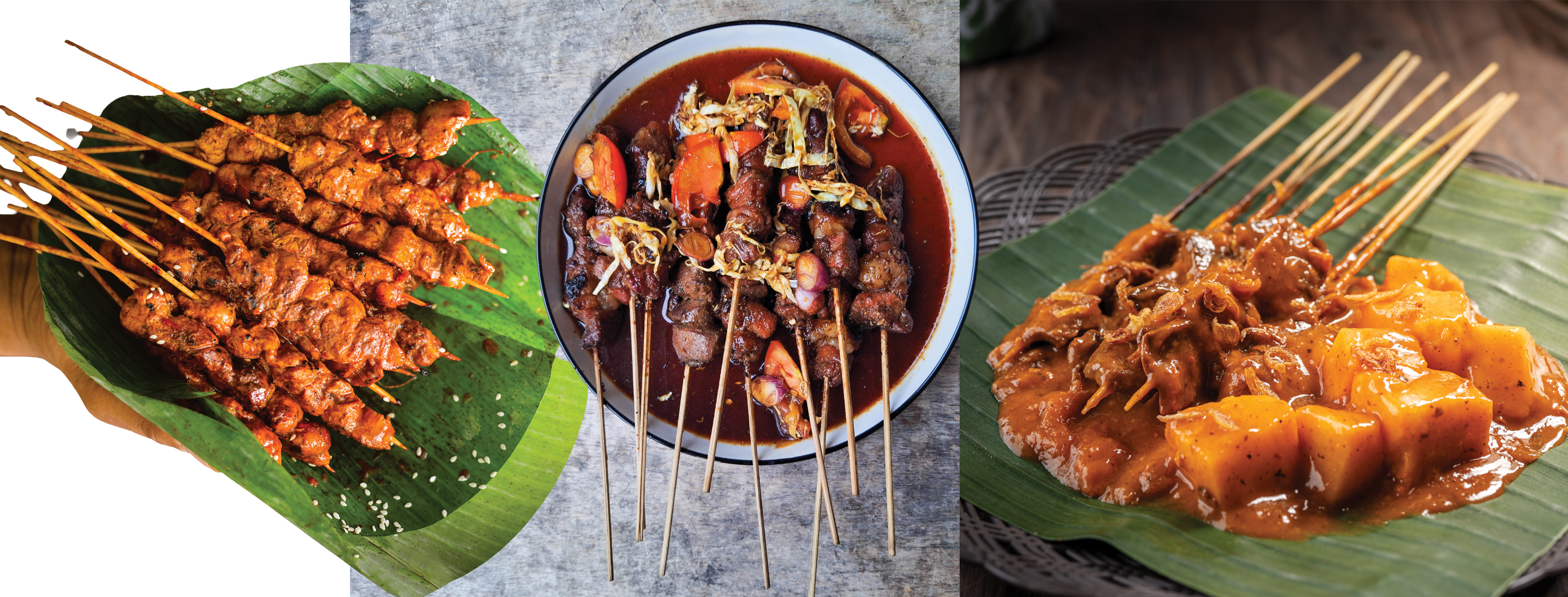
Satay: A Study in Fire, Smoke, and Sauce
Few dishes travel across Southeast Asia as seamlessly as satay — skewered, grilled, and widely loved. Yet, its character shifts dramatically depending on where you are.
In Malaysia, satay is defined by its marinade. The meat is infused with turmeric, lemongrass, and cumin, creating a rounded, aromatic flavour profile. The grilling introduces a light smokiness, while the peanut sauce remains rich, slightly sweet, and accessible — designed to complement rather than dominate.
In Indonesia, satay becomes far more diverse in expression. Satay Padang from West Sumatra is immediately recognisable for its thick, spice-heavy sauce. Unlike the familiar peanut base, it features a bold, peppery gravy made with rice flour, turmeric, and a complex spice blend. The sauce is central — intense, savoury, and deeply layered. Satay Madura, on the other hand, takes a simpler approach. The meat is less heavily marinated, allowing the natural flavours to come through. It is paired with a sweeter, kicap-based sauce, often topped with raw onions and chillies that introduce sharpness and contrast. Across other regions in Indonesia, satay continues to evolve, reflecting local preferences in spice, sweetness, and preparation.
Even in Thailand, a similar grilled skewered offering exists, often marinated with a heavier coconut milk base. This creates a slightly richer profile, paired with a peanut sauce that leans towards tang and spice.
Across borders, the method remains constant — flame, smoke, and skewers — but the interpretation is distinctly local.
Rendang: Time, Technique, and Intensity
Rendang is often described as a dish, but more accurately, it is a process. In Malaysia, rendang tends to be juicy, with gravy that clings to the meat. The coconut milk and spices are balanced to create richness without overwhelming, resulting in something layered yet approachable.
In Indonesia, particularly within the Minangkabau tradition, rendang prep goes further. Cooked slowly over extended periods, the liquid is reduced until almost fully absorbed. What remains is intensely concentrated — a deep, caramelised coating of spices enveloping the meat.
Here, rendang becomes an exercise in patience and technique. The difference is not just in flavour, but in philosophy — one prioritises balance, the other intensity.
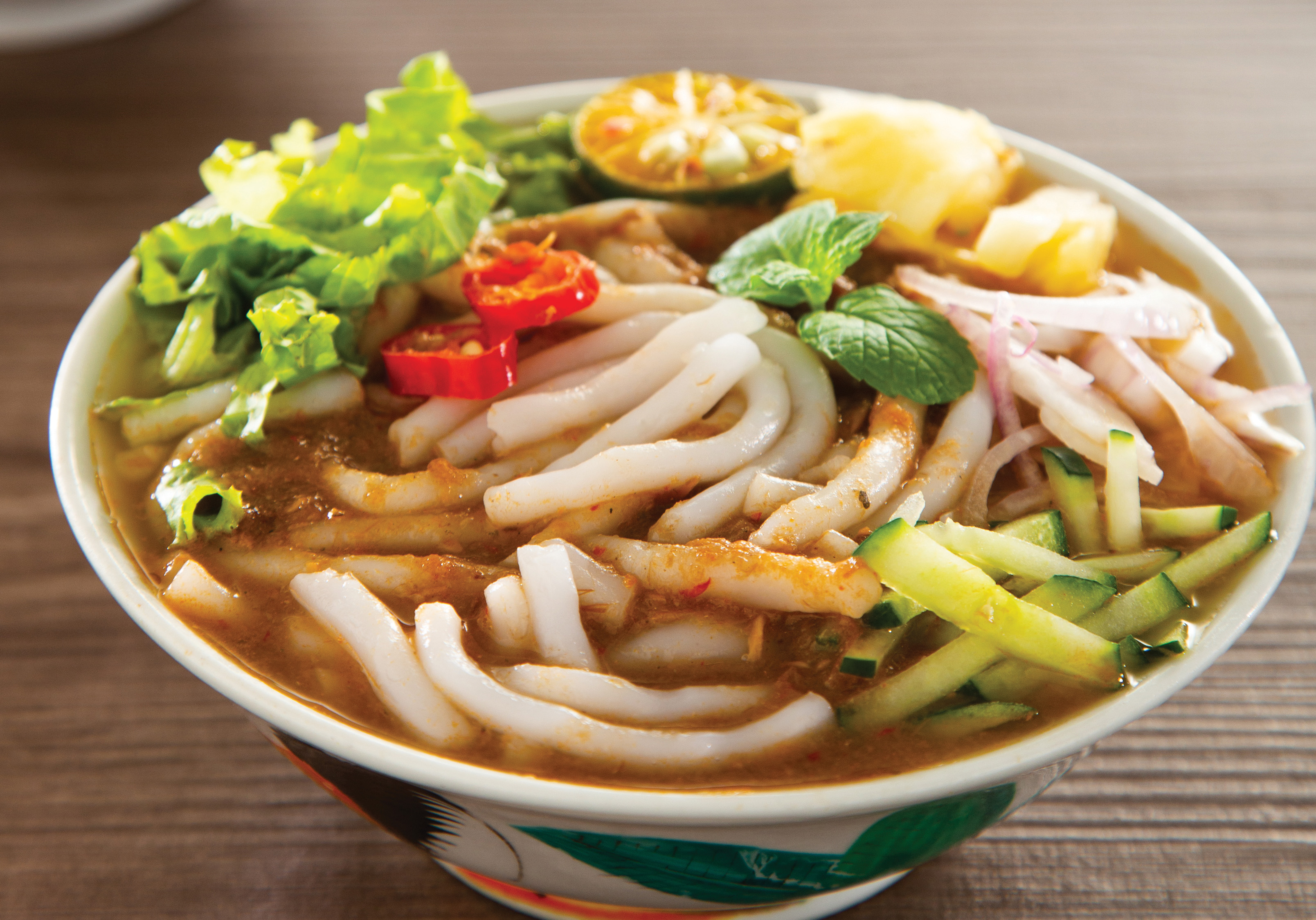
Laksa: One Name, Distinct Expressions
Laksa is perhaps one of the clearest examples of how a shared dish can evolve into entirely different identities across the region.
In Malaysia, laksa exists in distinct and contrasting forms. Curry laksa is rich, coconut-based, and deeply comforting — layered with spices that deliver warmth and depth. Asam laksa, in contrast, is sharp and tamarind-forward, built on a fish-based broth that introduces a bold, tangy complexity.
In Singapore, laksa takes on a more unified identity. The broth is typically creamy and consistent, with flavours that are smoother and more refined. Often adapted for ease, the noodles are cut shorter, creating an experience that is both accessible and polished.
While not traditionally labelled as laksa, Thailand offers a close cousin in dishes such as khao soi. Here, the similarities are familiar — a coconut-based curry broth, noodles, and layered spices — yet the execution differs. The broth carries a more pronounced curry profile, often richer and slightly sweeter, topped with crispy noodles and finished with pickled elements that introduce contrast.
It is not laksa in name, but in spirit, it reflects the same interplay of coconut, spice, and texture — interpreted through a different culinary lens. Across these variations, what remains constant is the foundation — yet each version tells its own story, shaped by local ingredients and taste.
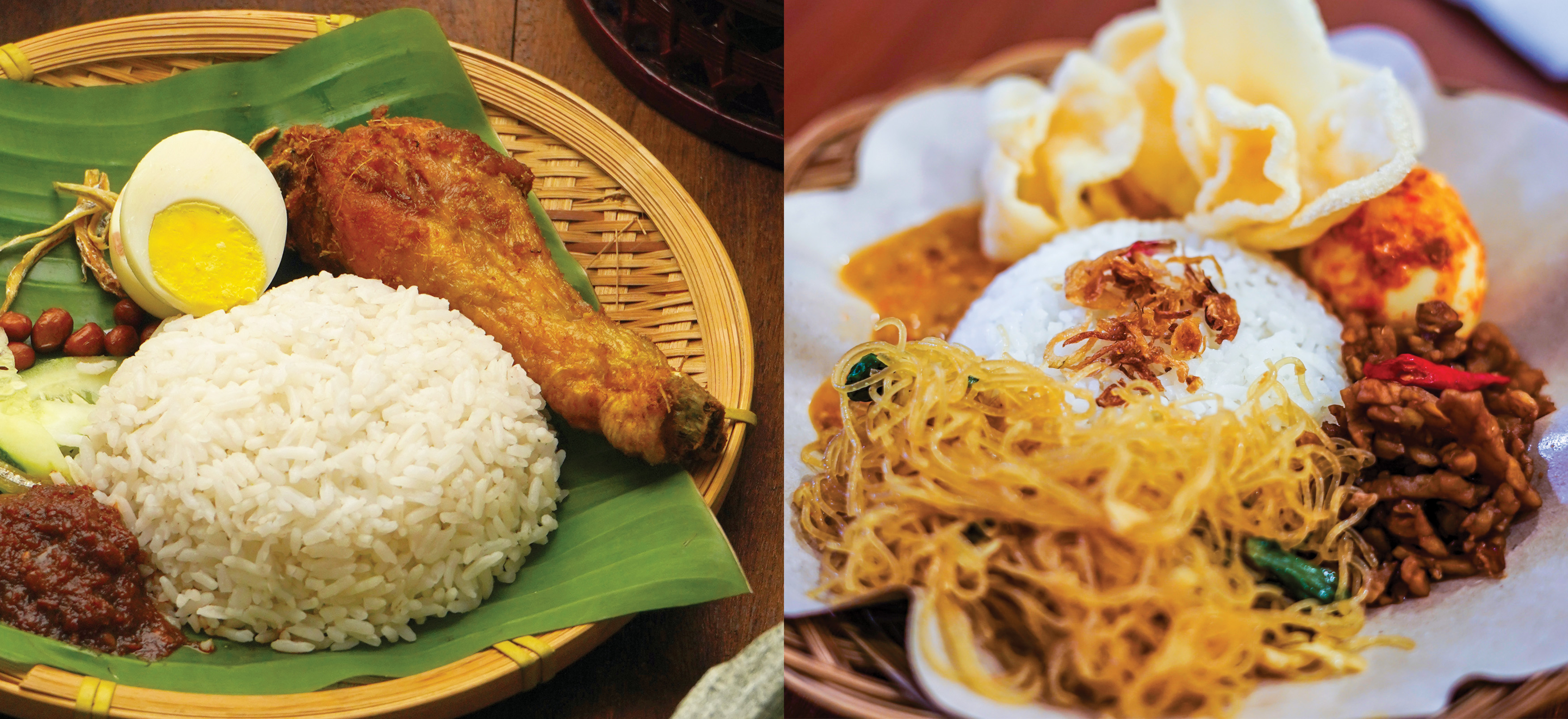
Nasi Lemak: Familiar, Yet Interpreted Differently
Nasi lemak is often seen as a regional staple, but even here, nuance matters.
In Malaysia, it is defined by balance. The coconut rice is fragrant yet restrained, paired with sambal that carefully blends sweetness, spice, and depth. Anchovies, peanuts, egg, and cucumber round out the dish, creating harmony in both flavour and texture.
In Singapore, the dish may appear more structured or slightly sweeter, with presentation that leans towards refinement and consistency.
In Indonesia, a closely related dish exists — not as nasi lemak, but as nasi uduk. While similar in concept, nasi uduk reflects its own identity. The rice is often cooked with a richer combination of coconut milk and additional aromatics such as pandan and spices, resulting in a deeper, more pronounced flavour profile. It is typically served with a different set of accompaniments, further distinguishing it from its Malaysian counterpart.
The resemblance is clear, but so is the distinction.
More Than Ingredients
What ultimately defines these differences is not just technique, but context.
The same base ingredients — lemongrass, galangal, turmeric, chillies, coconut — are used across the region. Yet proportions shift, combinations evolve, and preferences differ. Sweetness, spice, acidity, and texture are all calibrated uniquely, shaped by culture, history, and local palate. These are not variations to compare, but perspectives to appreciate.
There is something uniquely Southeast Asian about this shared culinary language — where dishes move freely across borders, yet never lose their individuality. Satay, rendang, laksa, nasi lemak — they connect the region while celebrating its diversity. Because here, food is never static. It evolves, adapts, and carries the identity of those who prepare it. And perhaps that is what makes it so compelling. Not that it is the same everywhere — but that it never is.
Subscribe
Select topics and stay current with our latest insights